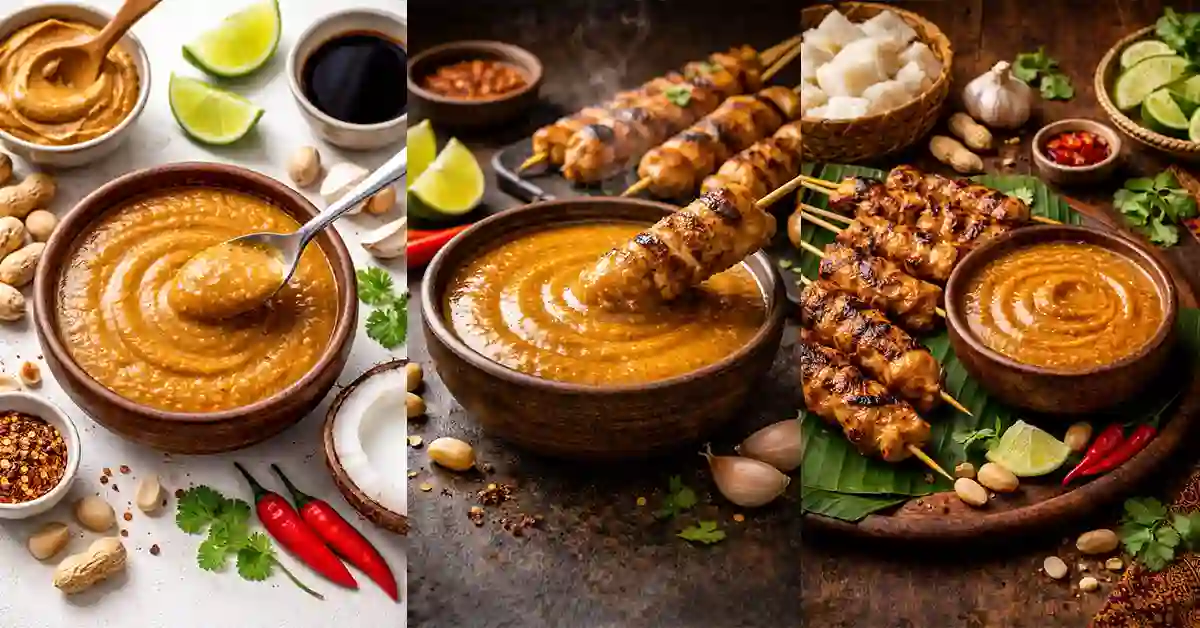
Satay Sauce Recipe Authentic Flavor Easy to Make Guide
Satay sauce is a rich, creamy, and slightly spicy sauce made mainly from peanuts. It is very popular in Southeast Asian countries like Indonesia, Thailand, and Malaysia. People often serve it with grilled meat, especially chicken satay, but it also tastes great with vegetables, noodles, and rice.
This sauce has a smooth texture and a bold flavor. It is a mix of sweet, salty, and a little spicy taste all in one bite. The main ingredient is usually peanut butter or ground peanuts. Other common ingredients include soy sauce, garlic, lime juice, and chili. Some versions also use coconut milk to make it extra creamy.
Why I Love This Recipe
I love this satay sauce recipe because it is quick, simple, and full of rich flavor. It uses easy ingredients that are often already in the kitchen, so there is no need for anything special. The creamy peanut taste mixed with a little sweet and spice makes every bite delicious.
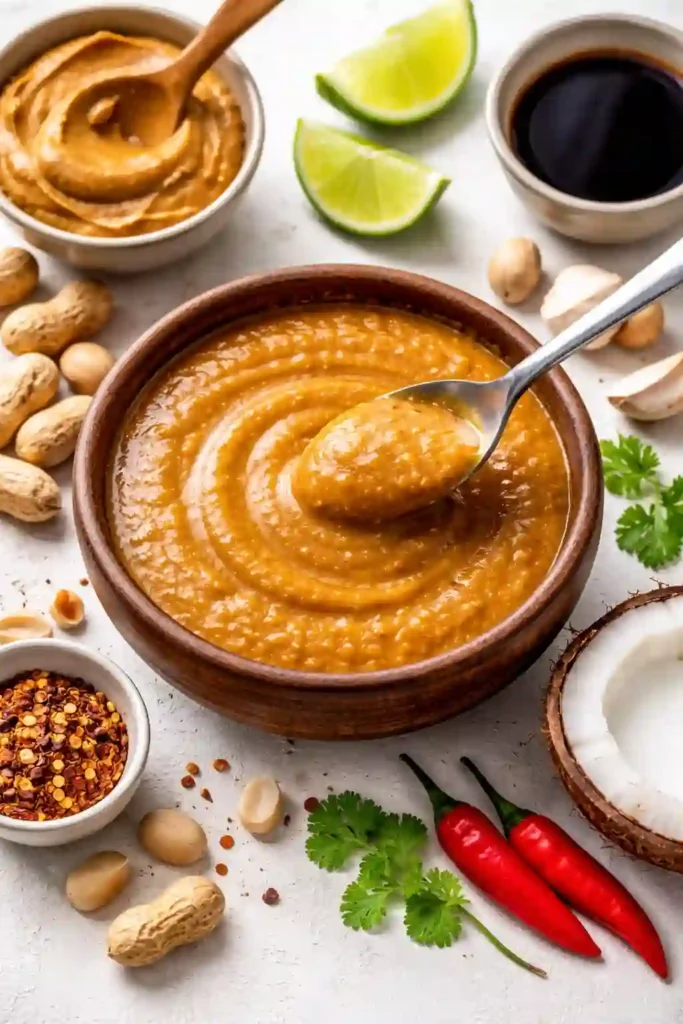
Ingredients for Satay Sauce
- Peanut Butter – 1/2 cup
Use smooth peanut butter for a creamy texture. It gives the sauce its rich base and nutty taste. - Soy Sauce – 2 tablespoons
Adds a salty and deep flavor that balances the sweetness. - Garlic – 2 cloves (minced)
Brings a strong and fresh taste that makes the sauce more flavorful. - Lime Juice – 1 tablespoon
Gives a light tangy flavor that lifts the overall taste. - Brown Sugar – 1 tablespoon
Adds a gentle sweetness and helps balance the salty and spicy notes. - Coconut Milk – 1/3 cup
Makes the sauce smooth and creamy while adding a mild tropical flavor. - Chili Paste or Chili Flakes – 1 teaspoon
Adds a little heat. You can adjust the amount based on your taste. - Water – 2 to 4 tablespoons
Helps thin the sauce to your desired consistency. - Salt – a pinch (optional)
Use only if needed, depending on the saltiness of the soy sauce.
Preparation Time
- Prep Time – 5 minutes
Gathering and measuring all ingredients takes very little time. - Cook Time – 5 to 7 minutes
The sauce comes together quickly on low heat. - Total Time – 10 to 12 minutes
A fast recipe that is perfect for busy days or quick meals.
How to Make Satay Sauce
- Step 1: Prepare all ingredients
Start by gathering all your ingredients in one place. Measure everything before you begin. This makes the process smooth and quick. Mince the garlic finely so it blends well into the sauce without leaving chunks. - Step 2: Heat a pan on low flame
Place a small pan on low heat. It is important to keep the heat low to avoid burning the sauce. Satay sauce cooks best slowly so the flavors can mix well. - Step 3: Add peanut butter and coconut milk
Add the peanut butter and coconut milk to the pan. Stir gently as they begin to warm up. Keep mixing until the texture becomes smooth and creamy. This step creates the base of the sauce. - Step 4: Mix in soy sauce and brown sugar
Pour in the soy sauce and add the brown sugar. Stir well until the sugar fully dissolves. This step gives the sauce its perfect balance of salty and sweet flavor. - Step 5: Add garlic and chili
Add the minced garlic and chili paste or chili flakes. Stir continuously so the garlic cooks slightly and releases its aroma. The chili adds a mild heat that you can adjust to your taste. - Step 6: Add lime juice
Turn the heat to very low and add the lime juice. Stir well to combine. The lime juice brings a fresh and slightly tangy taste that makes the sauce more lively. - Step 7: Adjust the consistency
Add water slowly, one tablespoon at a time. Keep stirring until you reach your desired thickness. Some people like it thick for dipping, while others prefer a thinner sauce for pouring. - Step 8: Taste and adjust
Taste the sauce and adjust the flavor if needed. You can add a little more sugar for sweetness, soy sauce for saltiness, or chili for extra heat. - Step 9: Serve warm
Once the sauce is smooth and well mixed, turn off the heat. Serve it warm for the best flavor and texture.
Tips for Perfect Satay Sauce
- Use good quality peanut butter
Choose a smooth and fresh peanut butter for the best taste. Natural peanut butter works well, but make sure it is well mixed before using. - Cook on low heat only
Always keep the heat low while cooking. High heat can burn the sauce and change its taste. Slow cooking helps all flavors blend nicely. - Stir continuously
Keep stirring the sauce while it cooks. This prevents sticking and keeps the texture smooth and creamy. - Balance the flavors
A good satay sauce should have sweet, salty, and slightly spicy taste. Taste as you go and adjust sugar, soy sauce, or chili as needed. - Adjust thickness carefully
Add water slowly to control the consistency. Too much water can make the sauce thin and less rich. - Use fresh ingredients
Fresh garlic and lime juice make a big difference in flavor. They give the sauce a bright and fresh taste. - Customize the spice level
Add more or less chili based on your preference. You can keep it mild or make it spicy. - Serve at the right temperature
Satay sauce tastes best when served warm. If it gets too thick after cooling, add a little water and reheat gently.
Serving Suggestions
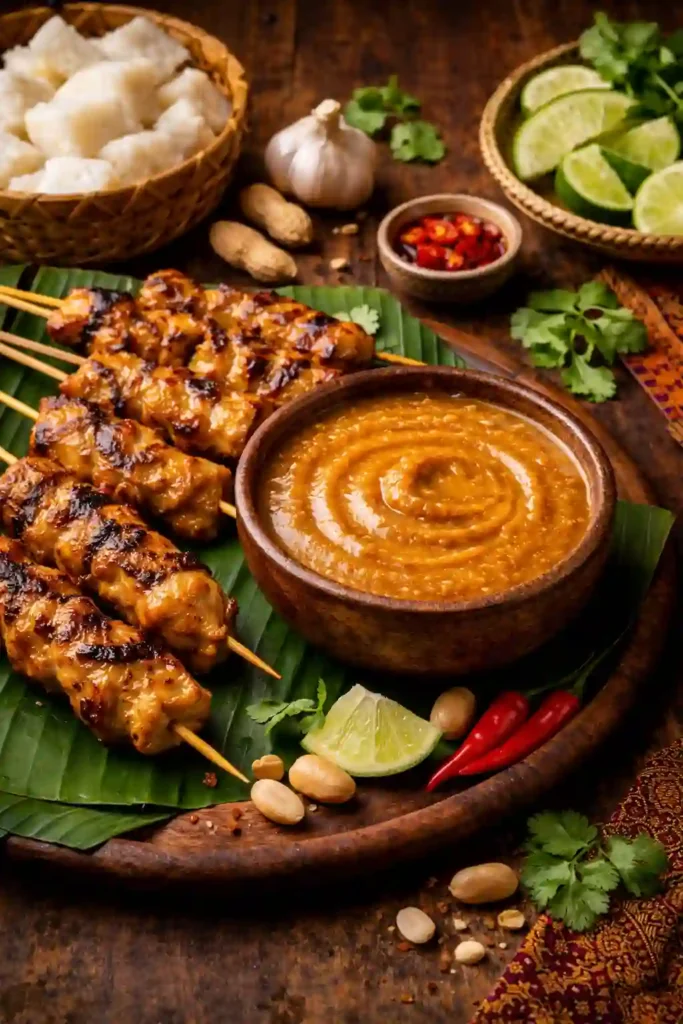
- With grilled chicken
Serve satay sauce with grilled chicken skewers for a classic and tasty combination. - As a dip
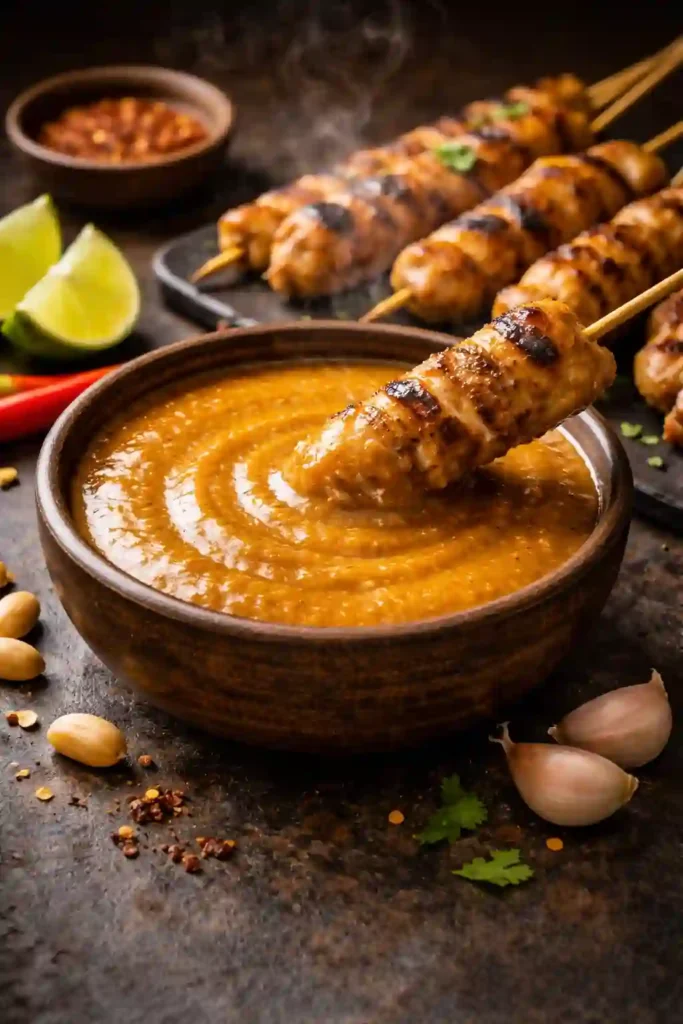
Use it as a dip for spring rolls, fries, or fresh vegetables like carrots and cucumbers. - With noodles or rice
Drizzle the sauce over noodles or steamed rice to add rich flavor to simple meals. - As a spread
Spread it in wraps or sandwiches for a creamy and nutty twist.
Storage Tips
- Store in an airtight container
Place the sauce in a clean, sealed container to keep it fresh. - Refrigerate properly
Keep it in the fridge for up to 5 days. The sauce may thicken over time. - Reheat gently
Warm it on low heat before use. Add a little water if it becomes too thick. - Avoid freezing
Freezing can change the texture, so it is best enjoyed fresh or refrigerated.
Nutrition Facts
- Calories – about 90 per tablespoon
Provides energy with a rich and satisfying taste. - Protein – 3 to 4 grams
Comes mainly from peanuts, helping support muscle health. - Fat – 7 grams
Healthy fats from peanuts give the sauce its creamy texture. - Carbohydrates – 4 to 5 grams
Includes natural sugars that add mild sweetness. - Fiber – 1 gram
Supports digestion and overall health.
Instructions
- Step 1: Gather ingredients
Collect all ingredients and measure them properly. This helps you follow the process without any delay. - Step 2: Prepare the base
Add peanut butter and coconut milk to a pan on low heat. Stir slowly until the mixture becomes smooth and creamy. - Step 3: Add flavor elements
Mix in soy sauce, brown sugar, and minced garlic. Stir well so all ingredients blend evenly. - Step 4: Add spice and tang
Add chili paste or flakes and a splash of lime juice. This gives the sauce its balanced taste. - Step 5: Adjust consistency
Pour in water little by little while stirring. Continue until you reach your preferred thickness. - Step 6: Taste and adjust
Taste the sauce and adjust flavors if needed. Add more sugar, salt, or chili based on your preference. - Step 7: Cook gently
Let the sauce cook for a few more minutes on low heat. Keep stirring to avoid sticking or burning. - Step 8: Serve or store
Turn off the heat and let it cool slightly. Serve warm or store in a sealed container for later use.
FAQs
1. What is satay sauce made of?
Satay sauce is mainly made from peanut butter or ground peanuts, which give it a rich and creamy base. Other common ingredients include soy sauce, garlic, lime juice, and a sweetener like brown sugar. Many recipes also add coconut milk to make the sauce smoother and more flavorful. Some versions include chili paste or flakes for a bit of heat. The combination of these ingredients creates a balanced sauce that is sweet, salty, creamy, and slightly spicy.
2. Can I make satay sauce without coconut milk?
Yes, you can easily make satay sauce without coconut milk. Simply replace it with water, milk, or even a light broth. While coconut milk adds a creamy texture and mild flavor, the sauce will still taste great without it. Just make sure to adjust the consistency and taste as needed.
3. How do I store leftover satay sauce?
Store leftover satay sauce in an airtight container and keep it in the refrigerator. It usually stays fresh for up to 5 days. When you are ready to use it again, reheat it gently on low heat. If the sauce becomes too thick, add a small amount of water and stir until smooth.
4. Is satay sauce spicy?
Satay sauce is usually mild, but it can be made spicy depending on your preference. The level of heat comes from chili paste or chili flakes. You can reduce or skip the chili if you want a mild flavor, or add more if you enjoy a stronger kick.
5. What can I serve with satay sauce?
Satay sauce pairs well with many dishes. It is commonly served with grilled chicken skewers, but it also works well as a dip for vegetables, spring rolls, or fries. You can drizzle it over noodles or rice, or use it as a spread in wraps and sandwiches.
6. Can I make satay sauce ahead of time?
Yes, satay sauce is perfect for making ahead. You can prepare it in advance and store it in the fridge. This not only saves time but also allows the flavors to develop more deeply. Just reheat and adjust the consistency before serving.

Satay Sauce Recipe Authentic Flavor Easy to Make Guide
4
servings5
minutes5
minutes300
kcalIngredients
Peanut Butter – 1/2 cup
Soy Sauce – 2 tablespoons
Garlic – 2 cloves (minced)
Lime Juice – 1 tablespoon
Brown Sugar – 1 tablespoon
Coconut Milk – 1/3 cup
Chili Paste or Chili Flakes – 1 teaspoon
Water – 2 to 4 tablespoons
Salt – a pinch (optional)
Directions
- Prepare all ingredients
Start by gathering all your ingredients in one place. Measure everything before you begin. This makes the process smooth and quick. Mince the garlic finely so it blends well into the sauce without leaving chunks. - Heat a pan on low flame
Place a small pan on low heat. It is important to keep the heat low to avoid burning the sauce. Satay sauce cooks best slowly so the flavors can mix well. - Add peanut butter and coconut milk
Add the peanut butter and coconut milk to the pan. Stir gently as they begin to warm up. Keep mixing until the texture becomes smooth and creamy. This step creates the base of the sauce. - Mix in soy sauce and brown sugar
Pour in the soy sauce and add the brown sugar. Stir well until the sugar fully dissolves. This step gives the sauce its perfect balance of salty and sweet flavor. - Add garlic and chili
Add the minced garlic and chili paste or chili flakes. Stir continuously so the garlic cooks slightly and releases its aroma. The chili adds a mild heat that you can adjust to your taste. - Add lime juice
Turn the heat to very low and add the lime juice. Stir well to combine. The lime juice brings a fresh and slightly tangy taste that makes the sauce more lively. - Adjust the consistency
Add water slowly, one tablespoon at a time. Keep stirring until you reach your desired thickness - Taste and adjust
Taste the sauce and adjust the flavor if needed. You can add a little more sugar for sweetness, soy sauce for saltiness, or chili for extra heat. - Serve warm
Once the sauce is smooth and well mixed, turn off the heat. Serve it warm for the best flavor and texture.
Notes
- Use good quality peanut butter
Choose a smooth and fresh peanut butter for the best taste. Natural peanut butter works well, but make sure it is well mixed before using. - Use fresh ingredients
Fresh garlic and lime juice make a big difference in flavor. They give the sauce a bright and fresh taste. - Customize the spice level
Add more or less chili based on your preference. You can keep it mild or make it spicy. - Serve at the right temperature
Satay sauce tastes best when served warm. If it gets too thick after cooling, add a little water and reheat gently. - Cook on low heat only
Always keep the heat low while cooking. High heat can burn the sauce and change its taste. Slow cooking helps all flavors blend nicely.
Admin