
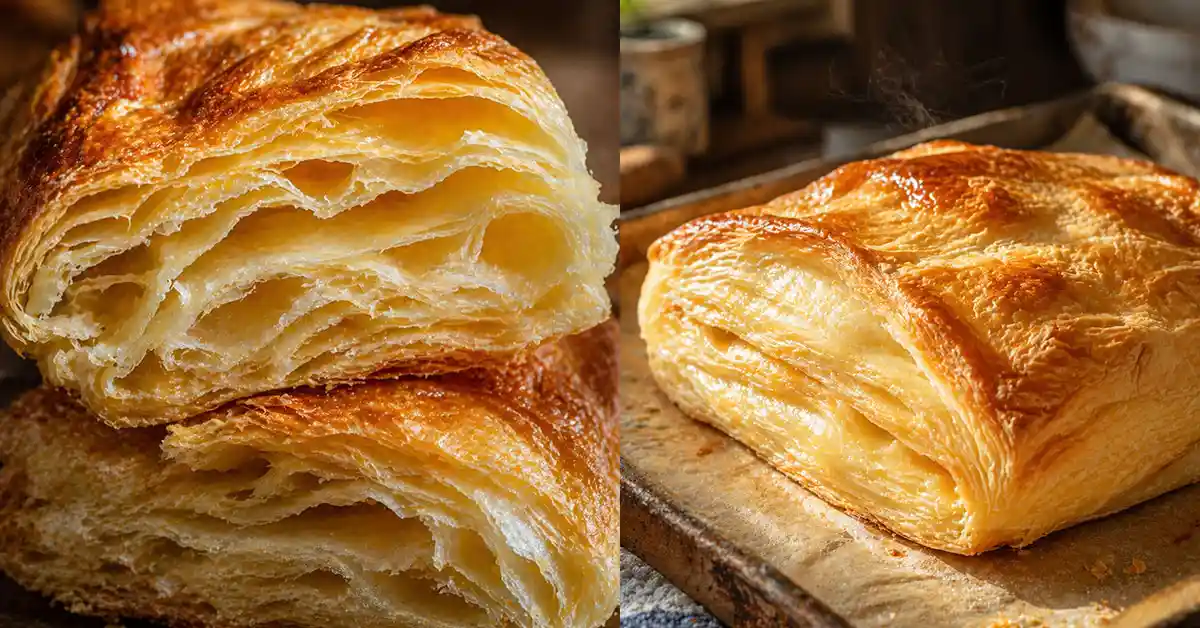
Easy Rough Puff Pastry Recipe With Perfect Buttery Layers
Have you ever wanted those light flaky pastry layers from a bakery, but felt scared to make them at home? You are not alone. Many people think puff pastry takes all day, uses fancy skills, and never turns out right. The butter leaks. The dough gets tough. The layers disappear.
But here is the good news.
You can make beautiful homemade rough puff pastry without all that stress.
This recipe gives you crisp buttery layers with much less work than classic puff pastry. It is simple, fast, and so satisfying. You fold, chill, and roll your way into golden flaky magic.
And once you see those layers puff in the oven?
You may never want store bought pastry again.
Keep scrolling because there is one small trick in this recipe that changes everything.
What Is This Recipe?
Rough puff pastry is a quick version of classic puff pastry. Instead of folding in a big butter block the traditional way, you work cold butter pieces right into the dough. Then you do simple folds that create layers.
As it bakes, those little butter pockets melt and make airy flaky sheets.
That is the magic.
It is called rough puff because it is less fussy but still gives amazing results. You can use it for sweet fruit pies, savory hand pies, cheese twists, breakfast pastries, and so much more.
What makes this recipe special is how easy it is while still tasting rich and buttery.
It feels fancy.
But it is beginner friendly.
Why You Will Love This Recipe
- Saves Time You get flaky pastry without spending a whole day laminating dough.
- Rich Buttery Taste Every bite tastes fresh and homemade in the best way.
- Easy for Beginners Simple folds make it feel doable even if you never made pastry.
- Budget Friendly Homemade costs less than buying frozen pastry sheets.
- Versatile Use it for sweet desserts or savory snacks.
- Better Texture Crisp outside and tender inside beats many store options.
- Freezer Friendly Make a batch now and bake later.
- Simple Ingredients Basic pantry staples become something amazing.
Here’s where most people get this wrong…
They let the butter get warm. Keep it cold and your pastry will reward you.
Ingredients
You only need a few simple ingredients, but each one matters.
- 2 1/2 cups all purpose flour This gives structure to the dough. Spoon and level the flour so you do not pack in too much.
- 1 teaspoon salt Salt wakes up the flavor. It keeps the pastry from tasting flat.
- 1 cup very cold unsalted butter Use butter straight from the fridge or even slightly frozen. Cut into cubes. Cold butter makes flaky layers.
- 1/2 cup ice cold water Add slowly. You may need a little more or less depending on your flour.
- 1 teaspoon lemon juice or vinegar This is optional but helps keep the dough tender.
- Extra flour for rolling Use lightly so dough does not stick, but do not overdo it.
Helpful swaps:
- Use European butter for richer flavor.
- For savory pastries add a pinch of black pepper.
- For sweet pastries add a spoon of sugar.
This recipe is simple, but quality butter makes a big difference.
How To Make Rough Puff Pastry
1. Make the Dough Base
In a large bowl mix flour and salt. Add the cold butter cubes and toss them in the flour. Press some pieces lightly with your fingers but keep many chunks visible. That is important. Those butter pieces create the flaky layers later.
Slowly drizzle in ice water while mixing gently with a fork. The dough should look shaggy and rough, not smooth. If it feels dry add a teaspoon of water at a time.
Turn it onto a floured surface and press it together. Do not knead like bread. Just bring it into a rough rectangle.
You should still see butter streaks.
That is perfect.
Wrap and chill for 20 minutes so everything stays cold.
2. Do the First Fold
Roll the chilled dough into a long rectangle. It may look messy at first. That is normal.
Fold the top third down and bottom third up like a letter. Turn the dough one quarter turn.
Roll again.
You will begin seeing streaks of butter and dough layering.
That is what you want.
Repeat this fold once more, then chill again for 20 minutes.
This keeps butter cold and stops sticking.
3. Build the Layers
Now repeat the rolling and folding two to four more times. Each fold creates more flaky layers.
Roll gently so butter does not break through.
If dough feels soft or warm, chill before continuing.
By the last folds the dough should feel smoother and show thin marbled butter streaks.
It looks beautiful.
This small trick makes a huge difference… never rush the chilling.
Cold dough puffs better.
4. Final Chill and Use
After your final fold wrap the dough tightly and chill at least 30 minutes. One hour is even better.
Now roll it for pies, tarts, turnovers, or cheese twists.
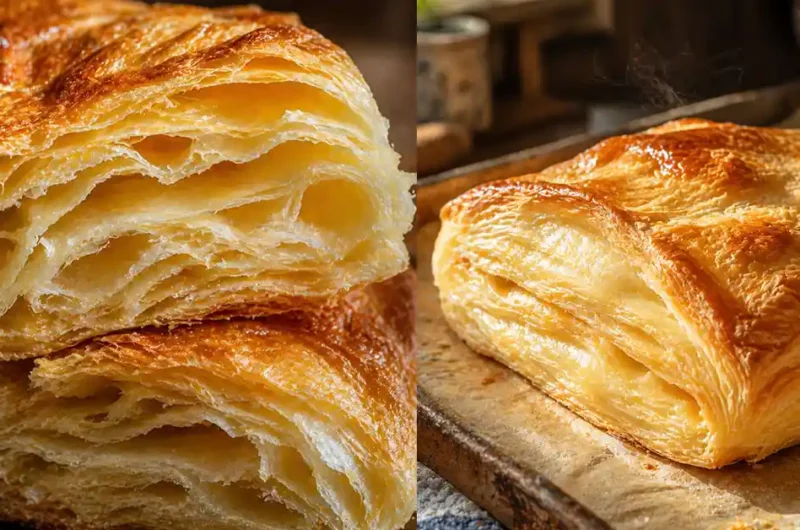
When baked it should turn golden, crisp, and deeply flaky.
You will hear that light crackly crunch.
That is homemade pastry success.
Bake until deeply golden, not pale.
Color means flavor.
Pro Tips
- Freeze butter for 10 minutes first. Extra cold butter gives stronger flaky pockets.
- Use a bench scraper. It helps lift sticky dough without tearing layers.
- Do not overwork the dough. Too much handling makes pastry tough.
- Chill between folds. This keeps layers separate and clean.
- Dust off excess flour. Too much loose flour can dry out the folds.
- Roll in one direction often. This keeps layers even.
- Bake in a hot oven. Strong heat creates puff fast.
- Brush with egg wash. It gives a shiny golden top.
- Rest before baking filled pastries. Cold shaped pastries puff better.
- Use sharp cuts. Clean edges help pastry rise instead of sealing shut.
Common Mistakes To Avoid
- Using warm butter melts the layers before baking.
- Adding too much water makes sticky heavy dough.
- Kneading like bread makes pastry dense.
- Skipping chill time ruins flakiness.
- Over rolling presses out butter pockets.
- Adding too much flour while rolling dries the dough.
- Baking at low heat gives greasy pastry.
- Under baking leaves pale soft layers.
- Sealing pastry edges poorly causes filling leaks.
- Cutting with dull tools squashes layers.
- Filling warm dough can soften butter too much.
- Using salted butter without adjusting salt can overpower flavor.
Most people do at least one of these.
Now you know better.
Variations and Customization Ideas
High Protein Version
Use part bread flour and fill baked pastry with eggs or cottage cheese for protein packed breakfast bites.
Vegan Version
Use plant based butter sticks. Keep them very cold just like dairy butter.
Quick Version
Do fewer folds. You still get flaky results when short on time.
Flavor Variations
Add herbs for savory pastry.
Add cinnamon sugar for sweet twists.
Mix grated cheese into dough for extra richness.
Use everything bagel seasoning for snack sticks.
Now let’s make it even better…
Turn this dough into apple turnovers or savory mushroom pockets.
Serving Ideas
Serve rough puff pastry so many ways:
- Make fruit hand pies for breakfast.
- Use for chicken pot pie.
- Bake cheese straws for parties.
- Wrap sausages for easy snacks.
- Turn into mini tarts with jam.
- Make flaky breakfast pastries with cream cheese.
- Serve warm with soup as savory twists.
It works for weekday snacks or holiday baking.
Storage and Reheating
Raw dough keeps in the fridge for 3 days wrapped well.
Freeze for up to 2 months.
Thaw in the fridge overnight.
Baked pastries keep 2 days at room temperature or 4 days in the fridge.
Reheat in the oven at 350 degrees until crisp again.
Avoid microwaving if you want flaky texture.
The oven brings back that crunch.
Nutrition Facts
Approximate per serving:
- Calories: 220
- Fat: 14g
- Carbs: 20g
- Protein: 3g
- Fiber: 1g
- Sodium: 180mg
Varies by filling and serving size.
Quick Summary
- Easy homemade rough puff pastry
- Buttery flaky layers
- Much faster than classic puff pastry
- Simple pantry ingredients
- Great for sweet or savory recipes
- Chill between folds for best results
- Perfect to make ahead and freeze
When To Eat This
This recipe fits real life so well.
Make it for busy mornings when you want something special.
Bake savory pastries for lunch boxes.
Use it for snack cravings when chips sound boring.
Make fruit turnovers for late night sweet cravings.
Perfect for holiday baking weekends.
Great when guests show up and you want something impressive.
Even post workout you can fill it with eggs and cheese for a hearty bite.
And honestly?
Sometimes you make rough puff pastry just because pulling apart warm flaky layers feels like comfort food magic.
Once you try it, you may keep a batch in your freezer all the time.
Frequently Asked Questions
- What is rough puff pastry?
Rough puff pastry is a quick homemade pastry dough made by folding cold butter into flour and dough. It creates flaky buttery layers much like classic puff pastry, but with less work and fewer steps. - Is rough puff pastry easier than traditional puff pastry?
Yes, it is much easier. Traditional puff pastry can take hours and needs precise lamination. Rough puff gives you similar flaky results in less time, making it great for beginners. - Why does my rough puff pastry not rise well?
This often happens when the butter gets too warm or the dough is not chilled enough. Cold butter and proper folding help create steam in the oven, which makes the pastry puff. - Can I make rough puff pastry ahead of time?
Yes. You can keep the dough in the fridge for up to 3 days or freeze it for up to 2 months. This makes it perfect for meal prep or holiday baking. - Can I freeze rough puff pastry dough?
Yes, and it freezes very well. Wrap it tightly so it stays fresh. Thaw it in the fridge overnight before rolling and baking. - What can I use rough puff pastry for?
You can use it for pies, tarts, turnovers, sausage rolls, cheese straws, hand pies, breakfast pastries, and many sweet or savory recipes. - Do I need special butter for this recipe?
No, regular unsalted butter works great. If you use high fat butter, you may get even richer flavor and flakier layers. - Can I use rough puff pastry for sweet recipes?
Yes. It is wonderful for fruit turnovers, cinnamon twists, jam tarts, and dessert pastries. It works for both sweet and savory baking. - Why is my pastry tough instead of flaky?
This can happen if you overwork the dough or add too much water. Handle the dough gently and keep it cold for the best soft flaky texture. - How many folds does rough puff pastry need?
Most recipes use about 4 to 6 folds. Each fold creates more layers, which helps the pastry become light crisp and golden. - Can I make this recipe without a food processor?
Yes. Many bakers prefer making it by hand. A bowl, pastry cutter, or even your fingers work well as long as the butter stays cold. - How do I know when the pastry is fully baked?
Look for deep golden color and crisp puffed layers. Pale pastry often means it needs more time and may not have full flavor or texture.
Easy Rough Puff Pastry Recipe With Perfect Buttery Layers
8
servings20
minutes25
minutes220
kcalChill Time: 1 hour
Ingredients
1/2 cups all purpose flour
1 teaspoon salt
1 cup very cold unsalted butter
1/2 cup ice cold water
1 teaspoon lemon juice or vinegar
Extra flour for rolling
Directions
- Make the Dough Base
In a large bowl mix flour and salt. Add the cold butter cubes and toss them in the flour. Press some pieces lightly with your fingers but keep many chunks visible. That is important. Those butter pieces create the flaky layers later.
Slowly drizzle in ice water while mixing gently with a fork. The dough should look shaggy and rough, not smooth. If it feels dry add a teaspoon of water at a time.
Turn it onto a floured surface and press it together. Do not knead like bread. Just bring it into a rough rectangle.
You should still see butter streaks.
That is perfect.
Wrap and chill for 20 minutes so everything stays cold. - Do the First Fold
Roll the chilled dough into a long rectangle. It may look messy at first. That is normal.
Fold the top third down and bottom third up like a letter. Turn the dough one quarter turn.
Roll again.
You will begin seeing streaks of butter and dough layering.
That is what you want.
Repeat this fold once more, then chill again for 20 minutes.
This keeps butter cold and stops sticking. - Build the Layers
Now repeat the rolling and folding two to four more times. Each fold creates more flaky layers.
Roll gently so butter does not break through.
If dough feels soft or warm, chill before continuing.
By the last folds the dough should feel smoother and show thin marbled butter streaks.
It looks beautiful.
This small trick makes a huge difference… never rush the chilling.
Cold dough puffs better. - Final Chill and Use
After your final fold wrap the dough tightly and chill at least 30 minutes. One hour is even better.
Now roll it for pies, tarts, turnovers, or cheese twists.
When baked it should turn golden, crisp, and deeply flaky.
You will hear that light crackly crunch.
That is homemade pastry success.
Bake until deeply golden, not pale.
Color means flavor.
Admin
