Thai Peanut Sauce Recipe Smooth Sweet and Savory
Thai peanut sauce is a rich, creamy sauce made from peanuts or peanut butter mixed with simple ingredients like soy sauce, lime juice, garlic, and a touch of sweetness.
It is a popular part of Thai cooking and is loved for its smooth texture and bold taste. The flavor is a perfect mix of sweet, salty, tangy, and slightly spicy, which makes it stand out in many dishes.
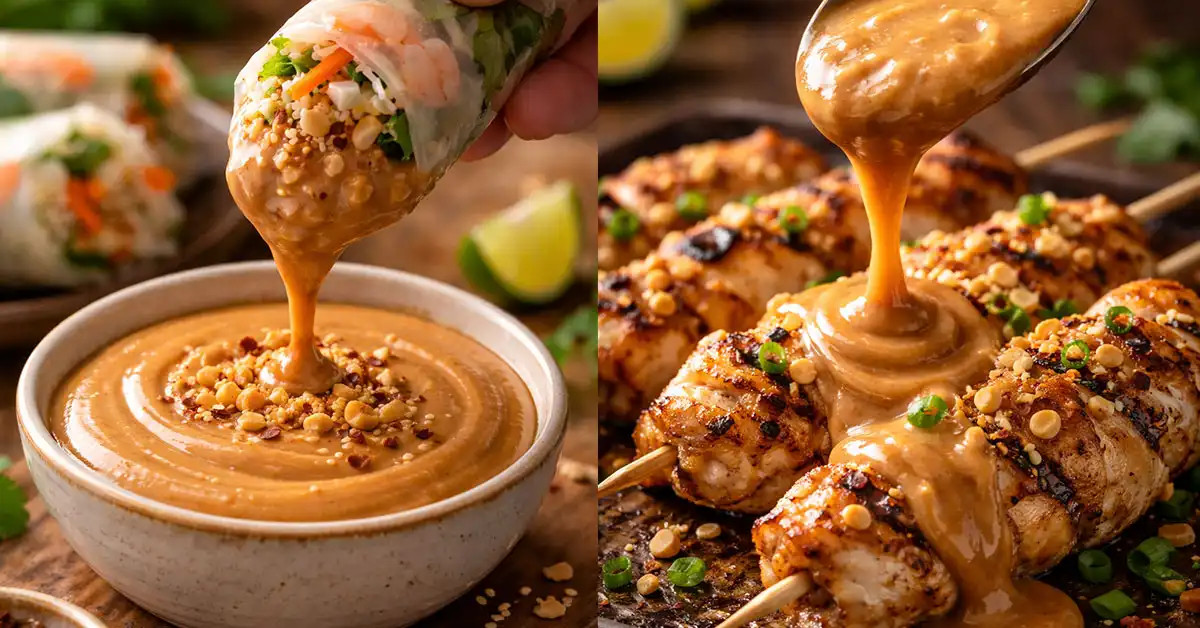
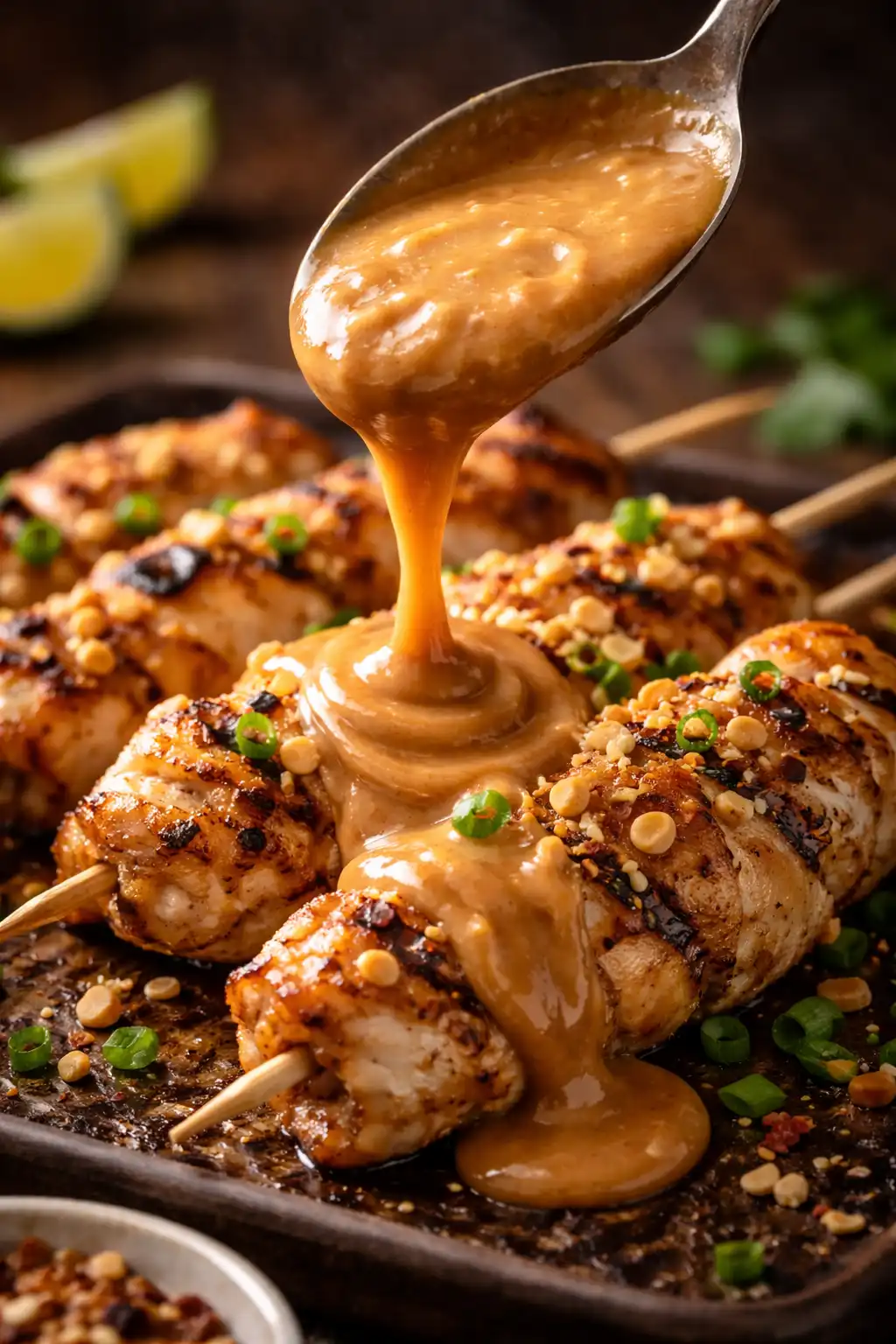
This sauce is often served with grilled meat, especially satay, where it works as a dipping sauce. It is also used with noodles, stir fried vegetables, and fresh rolls.
Many people enjoy it because it adds deep flavor without needing many ingredients. The best part is that it can be adjusted to your taste. You can make it more spicy, more sweet, or more tangy depending on what you like.
Why I Love This Recipe
I love this recipe because it is quick, simple, and full of flavor. The sauce turns basic ingredients into something rich and satisfying. It works with many dishes, from noodles to grilled chicken, which makes it very useful in the kitchen. I also like how easy it is to adjust the taste.
Ingredients for Thai Peanut Sauce
- Peanut Butter (½ cup)
Use smooth peanut butter for a creamy texture. It gives the sauce its rich base and nutty flavor. - Soy Sauce (2 tablespoons)
Adds a salty and savory taste that balances the sweetness of the sauce. - Lime Juice (1½ tablespoons)
Fresh lime juice brings a light, tangy flavor that makes the sauce taste fresh. - Honey or Brown Sugar (1½ tablespoons)
Adds a gentle sweetness that blends well with the salty and tangy ingredients. - Garlic (2 cloves, minced)
Gives a strong and fresh flavor that makes the sauce more bold and tasty. - Ginger (1 teaspoon, grated)
Adds a warm and slightly spicy touch that improves the overall taste. - Chili Flakes or Chili Paste (½ teaspoon)
Optional, but great if you want a little heat in your sauce. - Coconut Milk or Warm Water (¼ to ½ cup)
Helps thin the sauce and makes it smooth and easy to mix. - Sesame Oil (1 teaspoon)
Adds a light nutty aroma and enhances the flavor.
Preparation Time
- Prep Time (5 minutes)
This sauce comes together very quickly. Most of the time is spent gathering and measuring the ingredients. - Mixing Time (5–7 minutes)
Once everything is ready, mixing the sauce takes only a few minutes until it becomes smooth and creamy. - Total Time (10–12 minutes)
From start to finish, you can have the sauce ready in under 15 minutes, making it perfect for quick meals. - Servings (3–4 people)
This quantity is enough to serve as a dipping sauce or to mix into a main dish for a small family.
Kitchen Tools Needed
- Mixing Bowl
A medium sized bowl is perfect for combining all the ingredients بسهولة and without spilling. - Whisk or Spoon
A whisk helps create a smooth and lump free sauce, but a spoon also works well. - Measuring Cups and Spoons
These help you get the right balance of flavors by measuring each ingredient correctly. - Garlic Press or Knife
Useful for crushing or finely chopping garlic to release its full flavor. - Grater
Needed to grate fresh ginger easily and evenly. - Small Pan (Optional)
If you prefer a warm sauce, you can gently heat it for a few minutes while stirring. - Storage Jar or Container
Helpful if you want to store leftover sauce in the fridge for later use.
How to Make Thai Peanut Sauce
- Step 1: Add Peanut Butter to a Bowl
Start by placing the peanut butter in a medium sized mixing bowl. This will be the base of your sauce, so make sure it is smooth and easy to stir. - Step 2: Pour in Soy Sauce and Lime Juice
Add soy sauce and fresh lime juice to the bowl. These ingredients bring a balance of salty and tangy flavor that makes the sauce taste fresh and rich. - Step 3: Add Sweetness
Mix in honey or brown sugar. This step helps balance the strong flavors and gives the sauce a gentle sweetness that makes it more enjoyable. - Step 4: Add Garlic and Ginger
Add minced garlic and grated ginger to the mixture. These ingredients give a bold and slightly spicy taste that makes the sauce more flavorful. - Step 5: Add Chili for Heat (Optional)
If you like a bit of spice, add chili flakes or chili paste. You can adjust the amount based on your taste. - Step 6: Mix Everything Together
Use a whisk or spoon to mix all the ingredients. At first, the mixture may look thick, but keep stirring until it starts to come together. - Step 7: Add Liquid Slowly
Pour in coconut milk or warm water little by little while mixing. This helps control the thickness of the sauce and makes it smooth. - Step 8: Keep Mixing Until Smooth
Continue mixing until the sauce becomes creamy and free of lumps. The texture should be thick but easy to pour. - Step 9: Taste and Adjust
Taste the sauce and adjust the flavors if needed. You can add more lime for tang, more honey for sweetness, or more soy sauce for saltiness. - Step 10: Optional Light Heating
If you prefer a warm sauce, place it in a small pan and heat it on low for a few minutes while stirring gently. - Step 11: Serve or Store
Your Thai peanut sauce is now ready to use. Serve it fresh or store it in a sealed container in the fridge for later.
Tips for Perfect Thai Peanut Sauce
- Use Good Quality Peanut Butter
Choose a smooth and creamy peanut butter for the best texture. Natural peanut butter works well, but make sure it is well mixed before using. - Balance the Flavors Carefully
The key to a great sauce is balance. Make sure the sweet, salty, tangy, and spicy elements work together without one overpowering the others. - Add Liquid Slowly
Always add coconut milk or water little by little. This helps you control the thickness and prevents the sauce from becoming too thin. - Mix Until Fully Smooth
Take your time while mixing. A well blended sauce should be creamy with no lumps for the best result. - Taste as You Go
Do not skip tasting. Small adjustments like a bit more lime or honey can make a big difference in flavor. - Adjust Spice Level to Your Preference
Start with a small amount of chili and increase slowly if needed. This keeps the heat at a level you enjoy. - Use Fresh Ingredients
Fresh garlic and ginger give a stronger and more natural flavor compared to dried options. - Do Not Overheat
If you warm the sauce, keep the heat low. High heat can change the texture and make it too thick. - Let It Rest for Better Flavor
Allow the sauce to sit for a few minutes before serving. This helps all the flavors blend together nicely. - Store Properly
Keep leftover sauce in a sealed container in the fridge. Stir well before using again as it may thicken over time.
Variations and Substitutions
- Make It Spicy
Add extra chili paste or a few drops of hot sauce if you enjoy more heat. - Make It Mild
Skip chili completely for a smooth and family friendly version. - Use Maple Syrup Instead of Honey
A great option if you want a plant based sweetener with a slightly deeper taste. - Try Almond Butter
You can replace peanut butter with almond butter for a different but still creamy flavor. - Gluten Free Option
Use tamari instead of soy sauce to keep it gluten free.
How to Use Thai Peanut Sauce
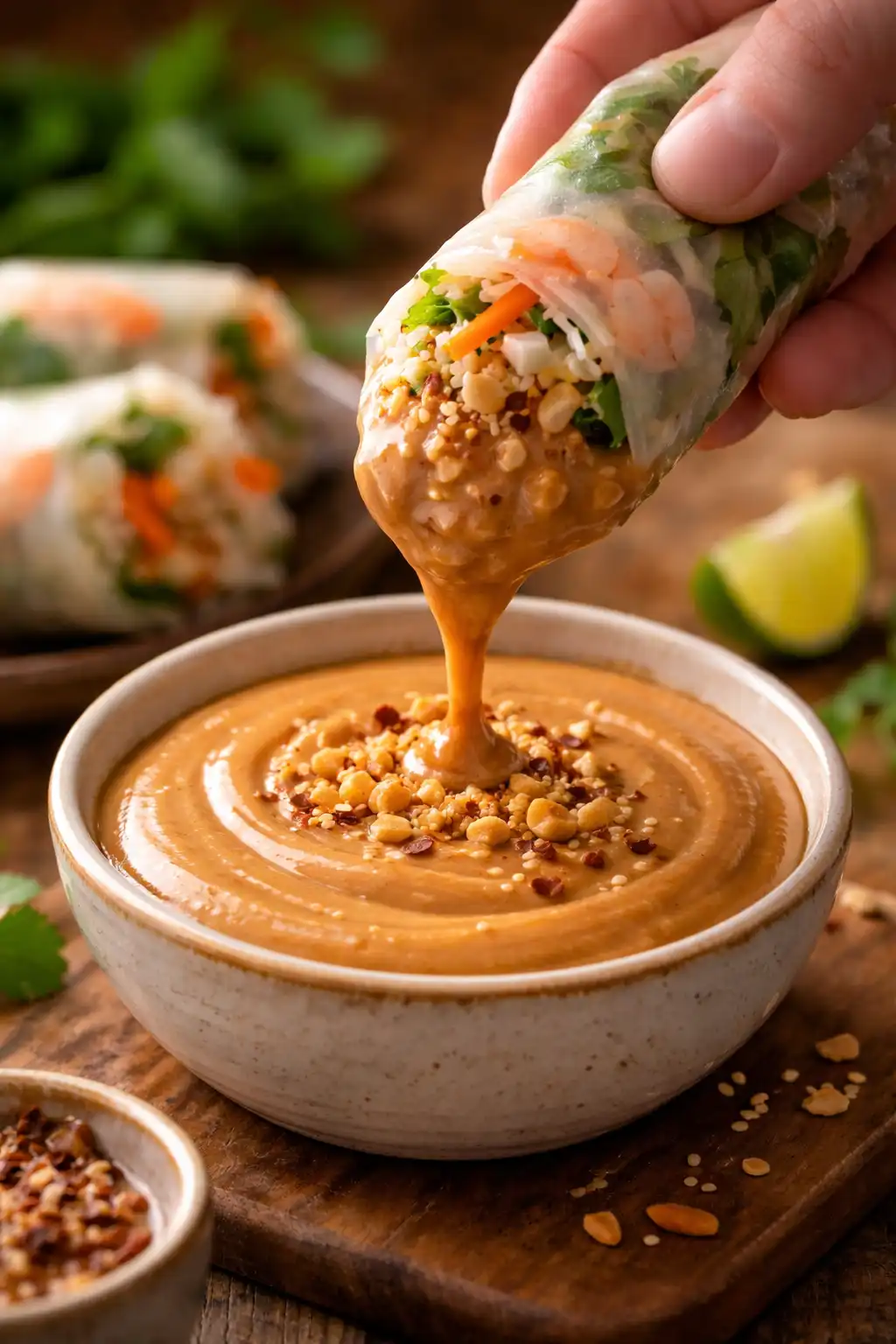
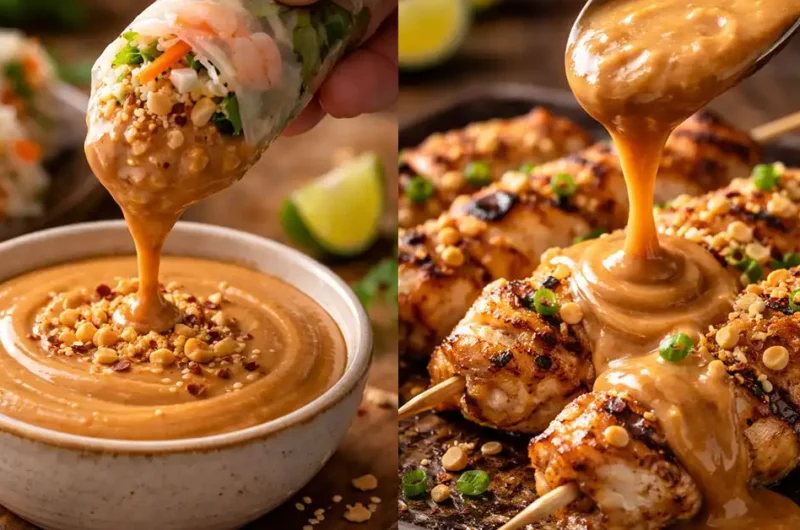
- As a Dipping Sauce
Perfect with spring rolls, grilled chicken, or snacks. - With Noodles
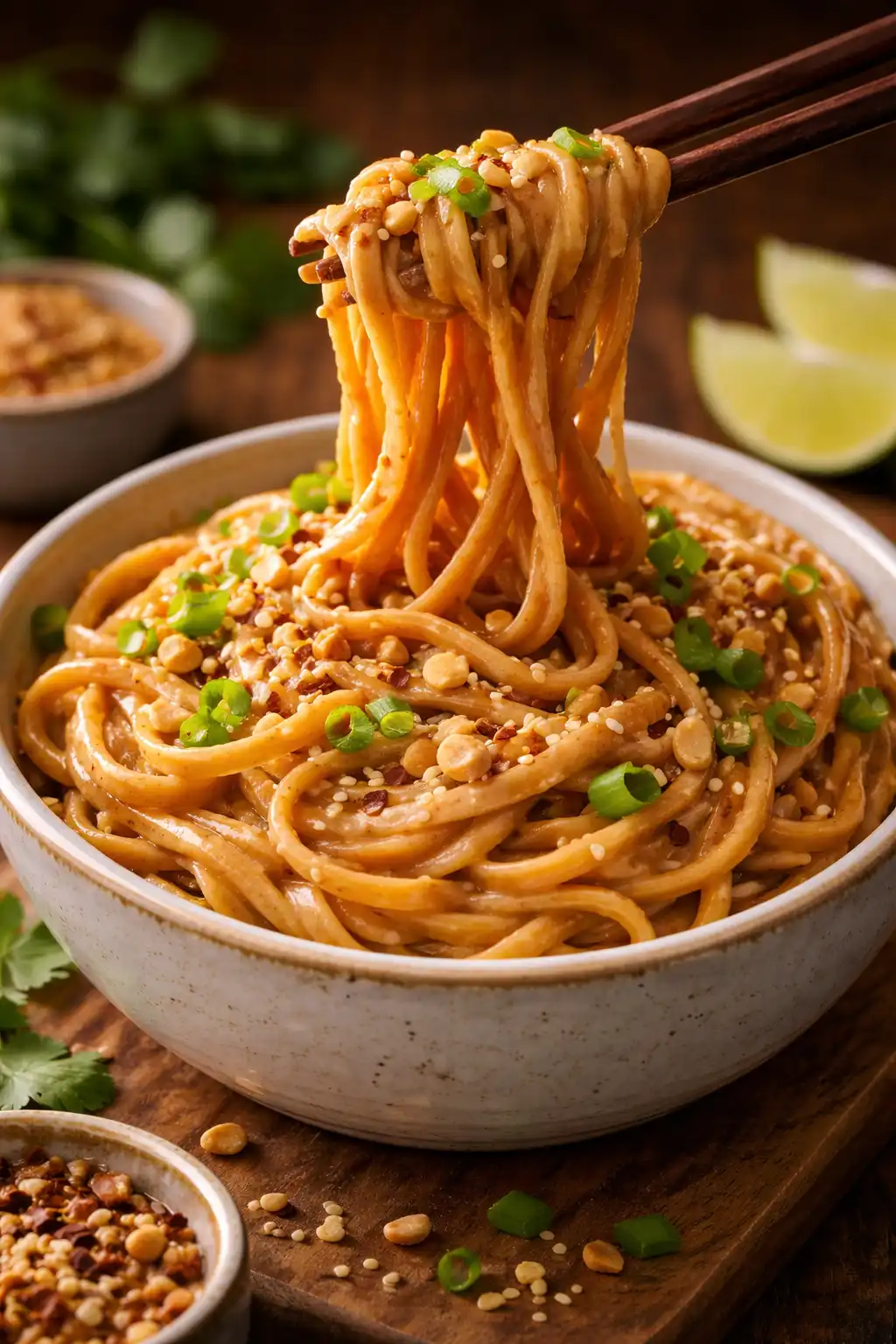
Toss it with cooked noodles for a quick and flavorful meal. - With Stir Fried Vegetables
Add it to vegetables to make them more rich and tasty. - As a Salad Dressing
Thin the sauce slightly and pour it over fresh salads.
Storage Tips
- Refrigerate Properly
Store the sauce in a sealed container in the fridge for up to 5 days. - Stir Before Use
The sauce may thicken, so mix well before using again. - Add Water if Needed
If it becomes too thick, add a little warm water to loosen it. - Avoid Freezing
Freezing can change the texture and make it less smooth.
Nutrition Facts
- Calories (per serving): Around 90–120 kcal
- Protein: 3–4 grams
- Fat: 7–9 grams
- Carbohydrates: 5–7 grams
- Sugar: 2–4 grams
- Fiber: 1–2 grams
Instructions
- Add all ingredients into a bowl.
- Mix well until smooth.
- Slowly add liquid to adjust thickness.
- Taste and adjust flavors as needed.
- Serve fresh or store for later use.
FAQs
- What does Thai peanut sauce taste like?
Thai peanut sauce has a rich, creamy taste with a mix of sweet, salty, tangy, and slightly spicy flavors. The peanut base gives it a smooth and nutty feel, while lime and soy sauce add freshness and depth. - Can I make Thai peanut sauce without coconut milk?
Yes, you can use warm water instead of coconut milk. Coconut milk adds extra creaminess, but water works well if you want a lighter version. - Is Thai peanut sauce spicy?
It can be, but it depends on how you make it. You can keep it mild by skipping chili or make it spicy by adding more chili paste or flakes. - How long does Thai peanut sauce last?
When stored in a sealed container in the fridge, it usually lasts up to 4 to 5 days. Always stir before using as it may thicken over time. - Can I freeze Thai peanut sauce?
It is not recommended to freeze it because the texture may change and become less smooth after thawing. - What can I serve with Thai peanut sauce?
It pairs well with grilled chicken, noodles, vegetables, rice dishes, and fresh rolls. It also works great as a dipping sauce. - Can I make it vegan?
Yes, simply replace honey with maple syrup or any plant based sweetener to make it fully vegan. - Why is my sauce too thick?
Peanut butter is naturally thick, so this can happen easily. Just add a small amount of warm water or coconut milk and mix until you reach the desired consistency. - Why is my sauce too thin?
If the sauce is too thin, add a bit more peanut butter and mix well until it thickens. - Can I use crunchy peanut butter?
Yes, you can. It will give the sauce a slightly textured feel instead of a smooth one, which some people enjoy.
Thai Peanut Sauce Recipe Smooth Sweet and Savory
4
servings5
minutes300
kcalMixing Time (5–7 minutes)
Ingredients
Peanut Butter (½ cup)
Soy Sauce (2 tablespoons)
Lime Juice (1½ tablespoons)
Honey or Brown Sugar (1½ tablespoons)
Garlic (2 cloves, minced)
Ginger (1 teaspoon, grated)
Chili Flakes or Chili Paste (½ teaspoon)
Coconut Milk or Warm Water (¼ to ½ cup)
Sesame Oil (1 teaspoon)
Directions
- Add Peanut Butter to a Bowl
Start by placing the peanut butter in a medium sized mixing bowl. This will be the base of your sauce, so make sure it is smooth and easy to stir. - Pour in Soy Sauce and Lime Juice
Add soy sauce and fresh lime juice to the bowl. These ingredients bring a balance of salty and tangy flavor that makes the sauce taste fresh and rich. - Add Sweetness
Mix in honey or brown sugar. This step helps balance the strong flavors and gives the sauce a gentle sweetness that makes it more enjoyable. - Add Garlic and Ginger
Add minced garlic and grated ginger to the mixture. These ingredients give a bold and slightly spicy taste that makes the sauce more flavorful. - Add Chili for Heat (Optional)
If you like a bit of spice, add chili flakes or chili paste. You can adjust the amount based on your taste. - Mix Everything Together
Use a whisk or spoon to mix all the ingredients. At first, the mixture may look thick, but keep stirring until it starts to come together. - Add Liquid Slowly
Pour in coconut milk or warm water little by little while mixing. This helps control the thickness of the sauce and makes it smooth. - Keep Mixing Until Smooth
Continue mixing until the sauce becomes creamy and free of lumps. The texture should be thick but easy to pour. - Taste and Adjust
Taste the sauce and adjust the flavors if needed. You can add more lime for tang, more honey for sweetness, or more soy sauce for saltiness. - Optional Light Heating
If you prefer a warm sauce, place it in a small pan and heat it on low for a few minutes while stirring gently. - Serve or Store
Your Thai peanut sauce is now ready to use. Serve it fresh or store it in a sealed container in the fridge for later.
Notes
- Use Good Quality Peanut Butter
Choose a smooth and creamy peanut butter for the best texture. Natural peanut butter works well, but make sure it is well mixed before using. - Taste as You Go
Do not skip tasting. Small adjustments like a bit more lime or honey can make a big difference in flavor. - Use Fresh Ingredients
Fresh garlic and ginger give a stronger and more natural flavor compared to dried options. - Let It Rest for Better Flavor
Allow the sauce to sit for a few minutes before serving. This helps all the flavors blend together nicely.
Admin